Clinical and Translational Science Research Infrastructure
Lack of Investment in US Family Medicine Research
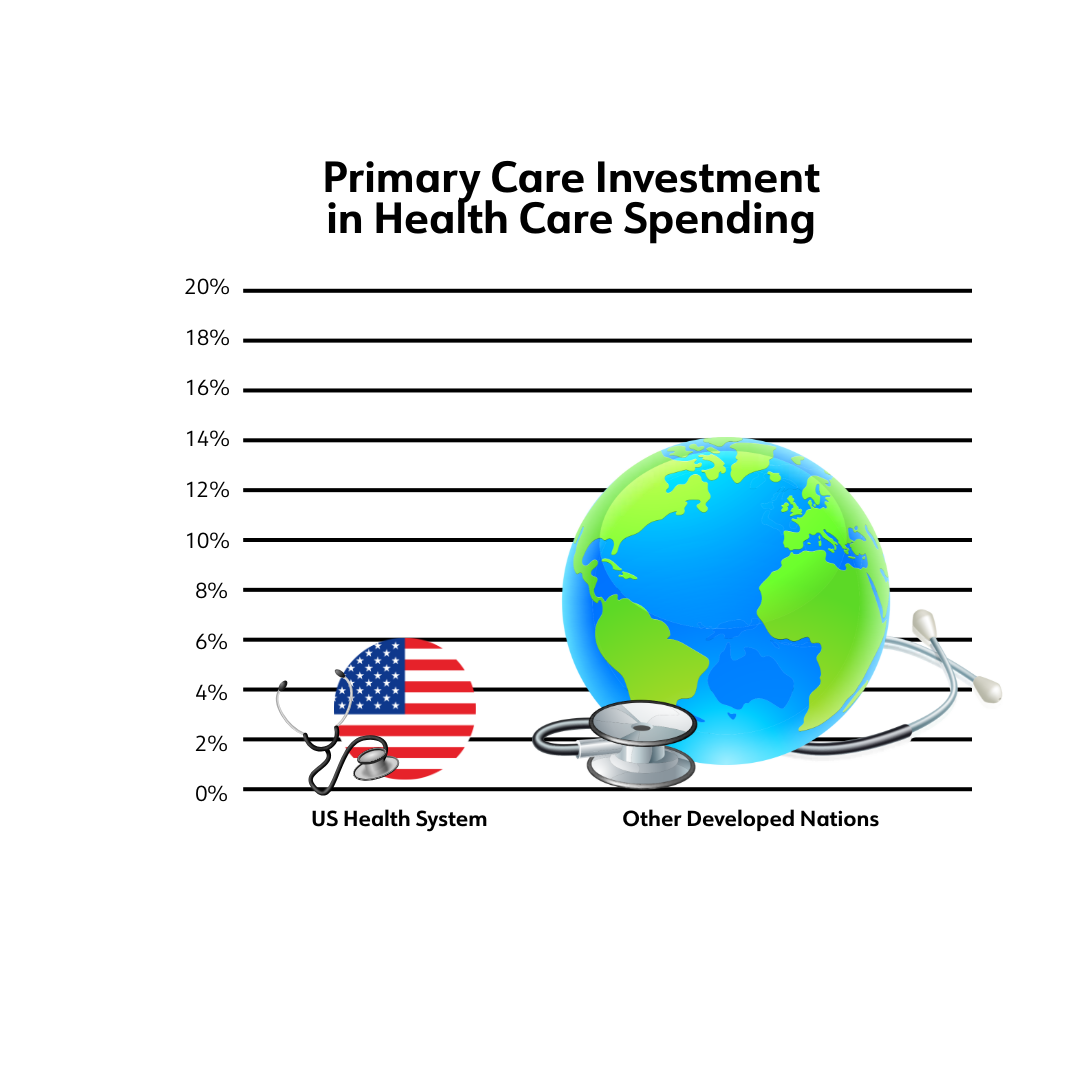
Although it is the largest funder of biomedical research, the National Institute of Health, spent only 0.2% of its budget in 2021 on family medicine research.4 Despite being the largest specialty in the US Health system, primary care investment pales in comparison to other developed nations.5 This underinvestment impacts clinical care.6

Clinical and Translational Science Research Infrastructure in the United States
Building clinical and translational research infrastructure is essential for advancing primary care science and improving community health. Two key NIH programs support this goal: the Clinical and Translational Science Awards (CTSA) program, led by NCATS, and the Institutional Development Award for Clinical and Translational Research (IDeA-CTR) program, led by NIGMS. While they differ in geographic scope and institutional eligibility, both programs aim to accelerate the translation of research into practice, support the development of the clinical and translational workforce, and foster partnerships between researchers, clinicians, and communities.
Understanding what applies to you and how to access these resources:
Clinical and Translational Science Awards
The Clinical and Translational Science Awards (CTSA) through the National Institute for Health (NIH) supports a national network of medical institutions that speeds the translation of research discoveries into improved care. This program nurtures the field of translational science through education, training, and support. Connect with your local NIH Funded CTSA Hub to identify Funding Opportunities and access other resources
- A Guide to using NIH RePORTER can help departments search for grant opportunities, track awarded grants, understand funding timelines and identify CTSA Principal Investigators (PIs)
Institutional Development Award for Clinical and Translational Research (IDeA-CTR)
The IDeA-CTR program, funded by the National Institute of General Medical Sciences (NIGMS), is a federal initiative designed to build and strengthen clinical and translational research infrastructure in underserved and historically underfunded states. These often include rural regions and institutions that lack access to large, research-intensive networks. Through multi-institutional centers, the program supports pilot funding for early-stage investigators, mentorship and career development, core research resources, and community-engaged research. If you are located in an IDeA state, access NIGMS Funding Opportunities
Clinical and Translational Research Infrastructure Network (CTR-IN)
As part of the NIH’s IDeA-CTR program, the Clinical and Translational Research Infrastructure Network (CTR-IN) supports institutions in 13 IDeA-eligible states that often lack the centralized infrastructure of larger academic centers (largely in the Mountain West Region). Through pilot funding, mentoring, and shared research support, CTR-IN helps build research capacity in areas where family medicine departments and primary care research are often critical to population health. Connect with your local program to identify MW CTR-IN Funding Opportunities
Want to build Research Capacity?
Early steps in collaboration - “Getting started with community-based research” based on the JABFM article, “Building Family Medicine Research Through Community Engagement: Leveraging Federal Awards to Develop Infrastructure
The seven strategic opportunities for family medicine to expand its research capacity and impact, based on the JABFM article, “Leveraging the Clinical Translational Science Award Network to Advance Family Medicine Research”
-
Community Engagement with those interested and affected
-
PBRNs
-
Research Training, Education and Workforce Development
-
Research Services and Pilot
-
Alignment for Health Informatics Adoption and Integration
-
Clinical & Translational Science Research Programs
-
Apply to Establish a new CTSA
Case Study: The Rutgers Robert Wood Johnson Medical School Department of Family Medicine and Community Health Story shows how community-engaged research infrastructure positioned a department to lead a CTSA community core
Importance of Relationship and Networking
-
Attend events like the ACTS Conference
-
Publishing/review the Journal of Clinical and Translational Science (JCTS)
For questions and updates on the strategic plan, please reach out to Tom Vansaghi at tvansaghi@napcrg.org